
ARCHITECTURAL VISUALISATION
What Is Architectural Visualisation
Architectural visualisation is the process of turning architectural designs into clear, realistic CGI that helps architects, developers, and planners understand a project before it is built.
At Visual Trick, we specialise in 3D architectural visualisation, architectural CGI, CGI for architects, and CGI for developers, helping design teams, planners, and investors understand a project clearly and confidently.
Instead of relying only on technical drawings, you can present a visual story that shows how a space will look and feel in reality.
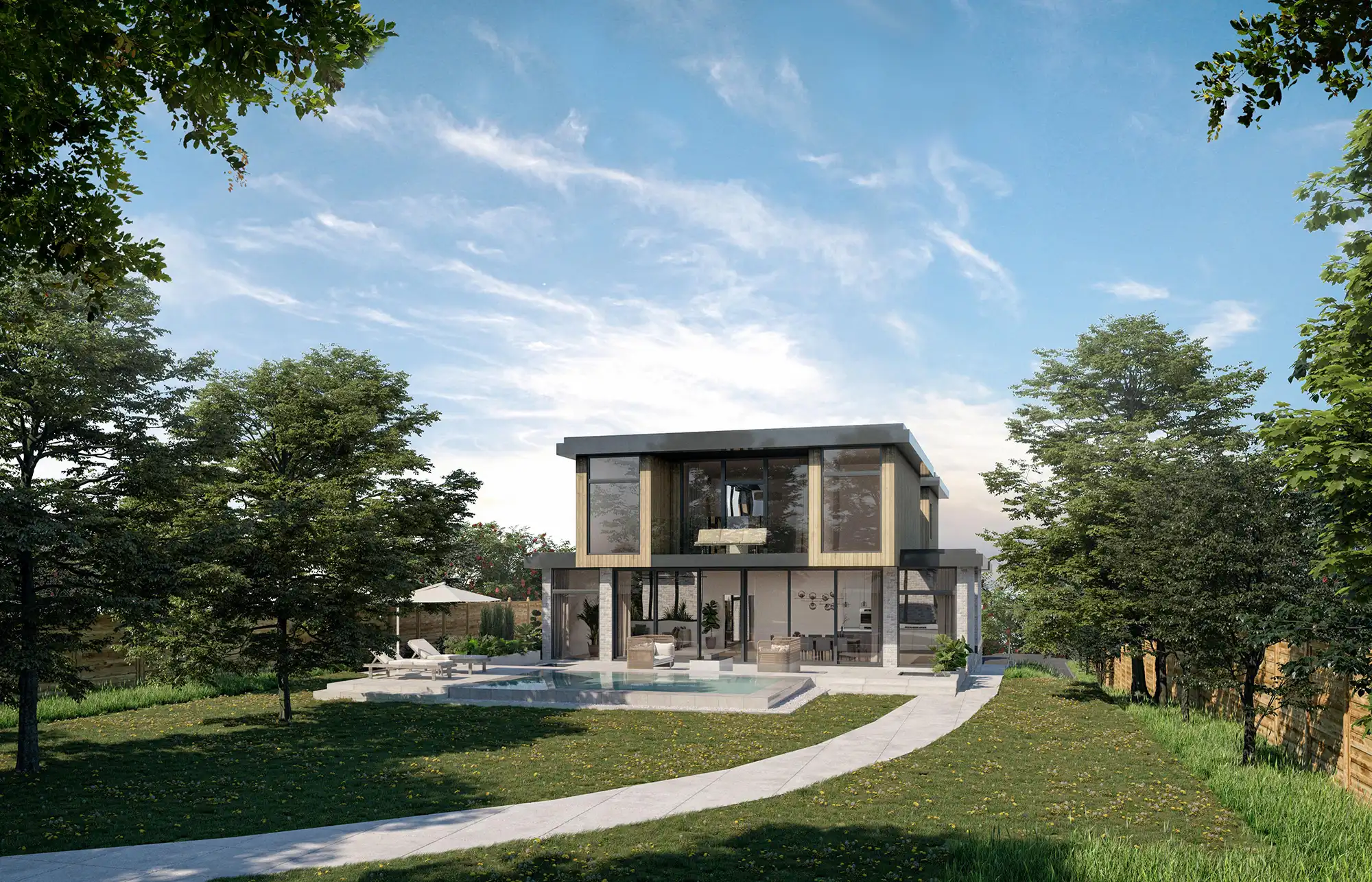
High quality CGI shows how light moves through a room, how materials interact, how landscaping frames a building, and how people will experience the environment.
This reduces uncertainty, speeds up decisions, and creates alignment between everyone involved in a project.
Our approach combines accuracy, realism, and narrative, ensuring every image supports design clarity, planning success, and commercial results.
Why Developers and Architects Use CGI
Architectural CGI has become a standard expectation across the property industry. It is used at concept stage, during planning, for marketing, and for investor presentations. Both architects and developers rely on 3D architectural visualisation and 3D rendering services for clarity, speed, and impact.
Our Workflow
Our workflow at Visual Trick is designed to be clear, predictable, and collaborative. You always know what is happening, what we need from you, and when you will see results. This keeps projects moving smoothly, even when timelines are tight.
1. Brief & References
We start by gathering all relevant information, architectural drawings, BIM models, PDFs, material schedules, mood boards, and any reference imagery you have. At this stage we clarify the purpose of the images, planning, marketing, internal presentation, or investor decks, and we agree on the number of views and deadlines.
2. 3D Modelling
Using your CAD files or BIM models where available, we build accurate 3D geometry that reflects the design. If only PDFs or hand sketches are available, we reconstruct the model carefully from those. Accuracy at this stage is critical, since it underpins every decision that follows.
3. Camera & Composition
Once the model is in place, we propose camera angles that best tell the story of the project. This can include hero exteriors, street level views, interior perspectives, amenity spaces, and key selling points. We share draft viewpoints so you can confirm that the angles match your priorities and narrative.
4. Materials & Lighting
We then apply materials based on your specifications, brick types, cladding, glazing, flooring, joinery, and soft finishes. Lighting is set up to match the desired mood, bright daytime, warm evening, dramatic dusk, or soft interior ambience. At this stage, the images begin to feel real, and you can see how the design comes together.
5. Draft Review
You receive draft images for review. This is your opportunity to comment on materials, colours, lighting, landscaping, furniture, and any design updates. We collect feedback in a structured way, so nothing is missed, and we agree on the changes required for the final round.
6. Final Rendering
After revisions, we produce high resolution final renders. In post production we refine contrast, colour balance, sky replacement if needed, people integration, and subtle grading to ensure the images feel polished and consistent with your brand or marketing style. Final files are delivered in the formats you need for print, web, and presentations.
This workflow keeps projects under control, reduces back and forth, and ensures you receive reliable, repeatable quality from Visual Trick.

INTERIOR VS EXTERIOR VISUALISATION
Architectural visualisation typically focuses on two main categories, exterior CGI and interior CGI. Both are important, but they serve slightly different purposes and are often used at different stages of a project.
EXTERIOR CGI
Exterior CGI focuses on the building in its wider context. It shows massing, form, materials, landscaping, and how the architecture sits within its surroundings. These images are particularly useful for:
- Planning submissions and design review panels
- Marketing brochures and websites
- Investor presentations and funding decks
- Public consultations and stakeholder engagement
Exterior visuals can highlight key features such as entrances, balconies, communal spaces, and how the building relates to the street or landscape. They help people understand scale, proportion, and overall character.
Interior CGI
Interior CGI brings internal spaces to life. It focuses on atmosphere, material quality, furniture, lighting, and how people will use the space. These images are essential for:
- Off plan sales and lettings
- Interior design presentations and sign off
- Marketing campaigns for residential and commercial schemes
- Showcasing amenities such as lobbies, lounges, gyms, and co working areas
Interior visuals can be styled to match your target audience, minimal and contemporary, warm and homely, or bold and expressive. They help buyers and tenants imagine themselves living or working in the space, which is critical for conversion
Used together, interior and exterior CGI create a complete visual story of a development, from the street presence to the smallest interior detail.
Planning Visuals Integration
Architectural visualisation is also a powerful tool in the planning process. When combined with planning specific CGI, it can make applications clearer, more transparent, and more persuasive.
Visual Trick provides a full range of planning visuals, including:
CGI Photomontage, where CGI is carefully integrated into real photography to show how a proposal will sit within its existing context.
Aerial CGI Photomontage, combining drone photography with CGI for large sites, masterplans, or schemes with significant landscape impact.
Planning Visuals, clear, honest imagery that supports design and access statements, committee reports, and public consultations.
By integrating these services with your architectural visualisation, we ensure consistency of design representation across planning, consultation, and marketing. This reduces confusion and builds trust with planning officers, stakeholders, and the public.
Portfolio Highlights
Our portfolio covers a wide range of project types and sectors. Visual Trick has produced CGI for:
Residential developments, from single dwellings to large multi unit schemes.
Commercial buildings, including offices, mixed use schemes, and retail.
Interior design projects, from show apartments to hospitality and workplace.
Care and later living schemes, where clarity and sensitivity are both important.
Planning focused visuals for complex or sensitive sites.
High end marketing imagery for premium developments.
Each project is approached with the same attention to detail, realism, and narrative.
We focus on what matters most for each client, whether that is planning success, sales velocity, brand alignment, or investor confidence.
FAQ
Ready to Bring Your Project to Life?
High end architectural visualisation can transform the way your projects are understood, approved, and sold. It reduces uncertainty, builds confidence, and creates a clear visual story that supports every stage of a development.
If you are planning a new scheme or need imagery for an existing project, Visual Trick can provide reliable, realistic CGI that works for architects, developers, and planning.
Let’s create something exceptional with Visual Trick.
