
EXTERIOR
CGI
Photorealistic exterior CGI has become an essential tool for architects, developers, and planning consultants who need to communicate design intent with clarity, accuracy, and visual impact.
Whether the goal is securing planning approval, elevating a marketing campaign, or presenting a scheme to stakeholders, high-quality exterior CGI transforms technical drawings into compelling, lifelike visuals that tell the full story of a development.
What Is Exterior CGI
Exterior CGI (Computer-Generated Imagery) refers to the creation of realistic 3D visualisations that depict the outside of a proposed architectural scheme.
Using advanced modelling, texturing, lighting, and rendering techniques, exterior CGI brings unbuilt spaces to life long before construction begins, producing realistic exterior CGI that accurately reflects materials and lighting.
These visuals are typically produced from architectural drawings such as CAD plans, elevations, sections, and material schedules.
The result is a set of images that accurately represent scale, massing, materials, landscaping, and environmental context through 3D architectural exterior render techniques.

Exterior CGI is used across:
Residential developments, Commercial buildings, Mixed-use schemes, Regeneration projects, Masterplans, Planning submissions, Property marketing campaigns. By blending technical precision with artistic direction, exterior CGI becomes a powerful communication tool for every stage of a project, especially when producing residential exterior CGI or mixed-use development CGI for planning and marketing.
Benefits for Developers
For property developers, exterior CGI is more than a visual asset, it’s a strategic advantage.
It supports decision‑making, accelerates sales, and strengthens investor confidence.
1. Faster Off‑Plan Sales
Investors respond to clarity. Exterior CGI communicates:
- The architectural vision
- The quality of materials
- The scale and ambition of the scheme
This makes it easier to secure funding and stakeholder buy‑in.
2. Stronger Investor & Stakeholder Presentations
High‑quality CGI allows buyers to emotionally connect with a property before it exists. This helps developers:
- Launch marketing campaigns earlier
- Increase pre‑sales and reservations
- Reduce financial risk
A strong set of exterior visuals can significantly shorten the sales cycle.
3. Enhanced Marketing Assets
Developers can explore multiple design options without committing to physical changes. CGI allows rapid testing of:
- Material palettes
- Façade treatments
- Landscaping concepts
- Lighting scenarios
This flexibility reduces costly late‑stage revisions.
4. Cost‑Effective Design Iteration
Exterior CGI becomes the foundation for:
- Brochures
- Websites
- Social media campaigns
- Hoarding graphics
- Advertising materials
Consistent, photorealistic imagery elevates brand perception and positions the development as premium.
Benefits for Architects
For architects, exterior CGI is a tool that enhances communication, supports design development, and strengthens planning submissions.
1. Clear Communication of Design Intent
Architectural drawings can be difficult for non‑technical audiences to interpret. Exterior CGI translates complex information into visuals that everyone can understand.
This helps architects:
- Present confidently to clients
- Communicate design rationale
- Reduce misunderstandings
2. Improved Planning Outcomes
CGI enables architects to test ideas visually, including:
- Material combinations
- Façade articulation
- Roof forms
- Landscaping strategies
This supports a more iterative, collaborative design process.
3. Design Development & Collaboration
Developers can explore multiple design options without committing to physical changes. CGI allows rapid testing of:
- Material palettes
- Façade treatments
- Landscaping concepts
- Lighting scenarios
This flexibility reduces costly late‑stage revisions.
4. Stronger Portfolio Presentation
Architects rely on strong visuals to showcase their work. Exterior CGI elevates:
- Competition entries
- Website portfolios
- Award submissions
- Client presentations
High‑quality imagery reinforces the architect’s design capability and aesthetic vision.
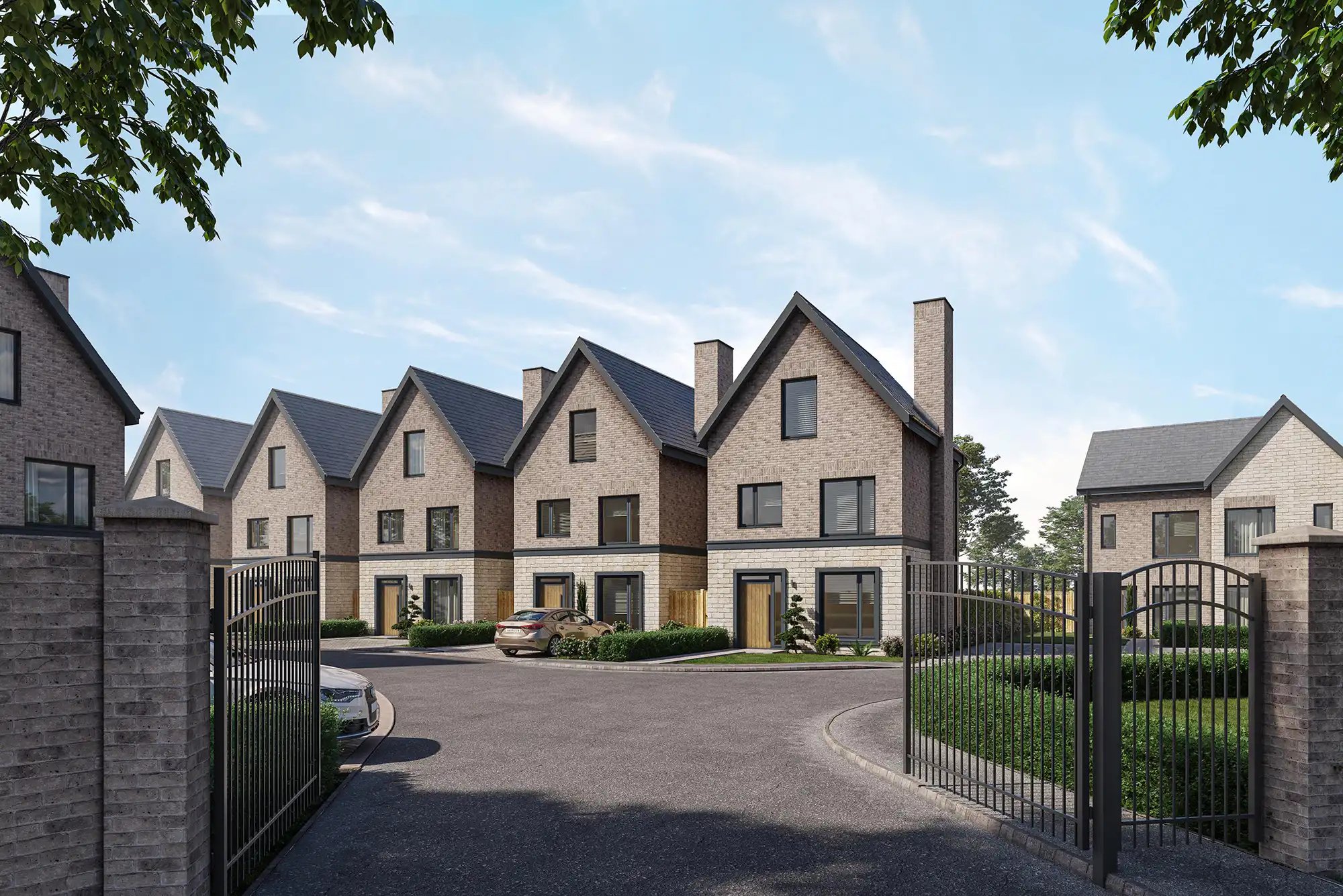
Lighting & Materials
Lighting and materials are the two most influential elements in achieving photorealistic exterior CGI.
They determine mood, realism, and the overall emotional impact of the image.
Planning Integration
Exterior CGI plays a critical role in planning submissions, helping demonstrate how a development integrates with its surroundings
1. Verified Views
For sensitive sites, planning authorities often require verified or AVR (Accurate Visual Representation) views. These combine:
Surveyed camera positions.
Lens data.
Photographic backplates.
3D model alignment.
This ensures the CGI is an accurate representation of the proposed development.
2. Streetscene Visuals
Streetscene CGI shows how the building sits within the existing urban fabric. This helps planning officers assess:
Scale – Massing
Character – Materiality
3. Context Modelling
For larger schemes, a wider context model may be required to show:
Neighbouring buildings.
Public realm.
Transport links.
Landscape integration.
4. Heritage & Conservation
Exterior CGI can support heritage statements by illustrating:
Impact on listed buildings.
Changes to key viewpoints.
Improvements to the public realm.
This strengthens the case for approval.
For more on planning‑focused visuals, see planning visuals.
Portfolio
Exterior CGI can be tailored to a wide range of project types, including, Residential developments, Commercial offices, Retail and leisure, Hotels and hospitality, Mixed‑use schemes, Regeneration projects, Masterplans, Public realm improvements.
Each project benefits from a bespoke visual approach that reflects its architectural character and marketing goals.
