
AERIAL
CGI
PHOTOMOTAGE
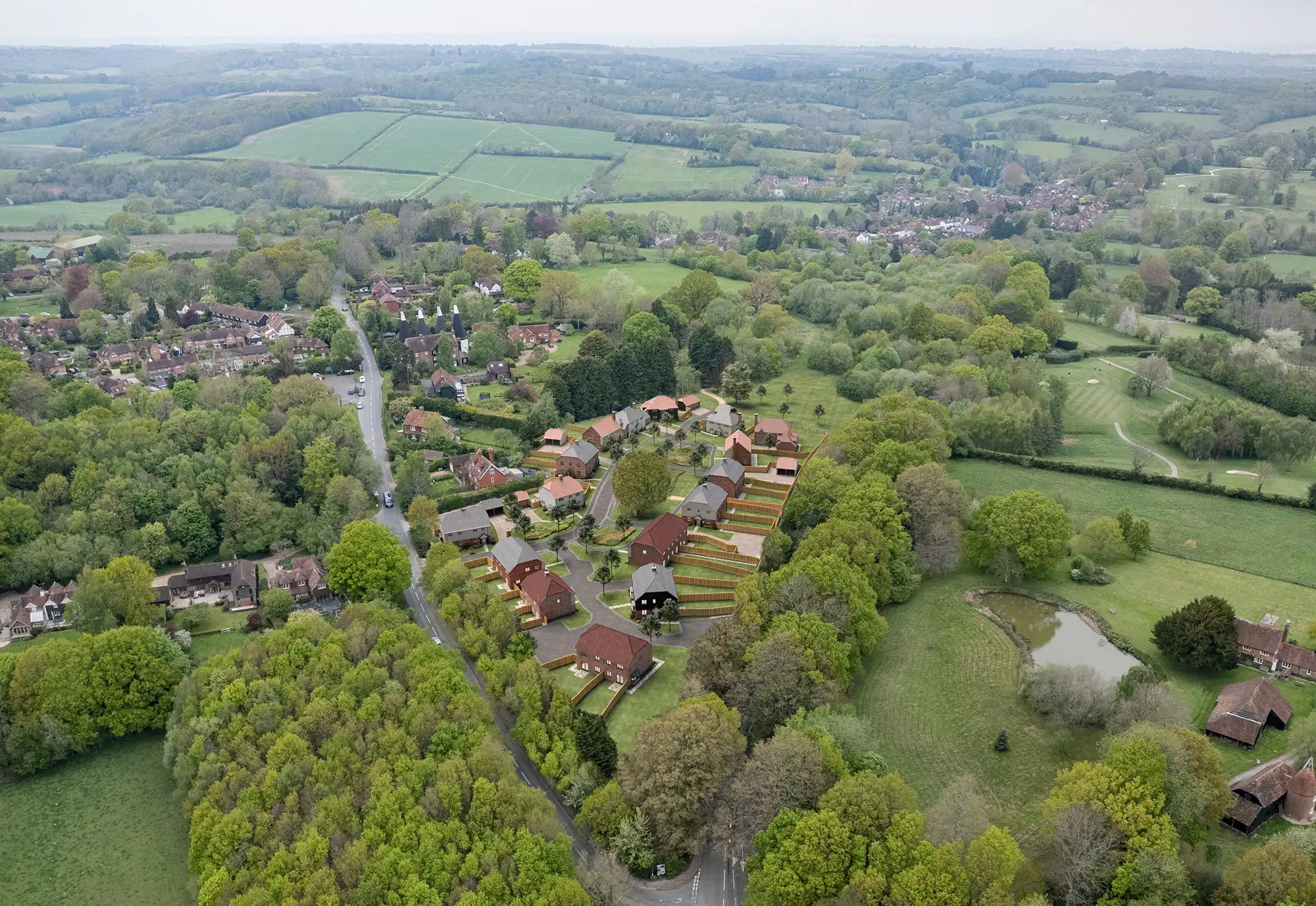
Aerial CGI photomontage combines drone photography with computer‑generated imagery to show how a proposed development fits into its wider environment.
It provides a clear, accurate and visually engaging representation of the project from above, helping planners, committees and stakeholders understand scale, context and impact. Aerial CGI photomontage is widely used for planning submissions, design presentations and marketing campaigns.
What Is Aerial Photomontage
Aerial photomontage is the process of integrating CGI models into real aerial photography captured by drone or aircraft.
It shows the proposed development from a bird’s‑eye perspective, illustrating how it interacts with surrounding buildings, roads and landscapes.
Aerial photomontage helps:
- visualise large‑scale developments
- communicate site layout and massing
- demonstrate environmental integration
- support planning and marketing materials
Aerial CGI provides a comprehensive overview of the site, making complex proposals easier to understand.
WHY ARCHITECTS USE CGI
Architects use CGI to translate technical drawings into visuals that are easy for non‑technical audiences to understand.
This is essential when presenting ideas to clients who may struggle to interpret plans, sections or elevations.
CGI also supports internal design development, allowing teams to test materials, massing and spatial relationships before committing to final decisions. It provides a reliable visual language that remains consistent across concept, planning and marketing stages.
For planning applications, CGI helps demonstrate context, scale and environmental integration. For client presentations, it enhances clarity and builds trust by showing exactly how the design will look once built.
Drone Capture
Drone capture is the foundation of aerial CGI photomontage.
High‑resolution drone photography provides accurate imagery of the site and its surroundings, ensuring the CGI integration is realistic and precise.
Drone capture includes:
- GPS‑verified camera positions
- altitude and lens data
- panoramic or orthographic imagery
- consistent lighting and weather conditions
Drone photography is ideal for:
- residential developments
- commercial sites
- regeneration projects
- masterplans and mixed‑use schemes
Using drone data ensures the aerial CGI matches real‑world conditions, providing planners with reliable visual evidence.
Accuracy
Accuracy is critical for aerial CGI photomontage, especially when used for planning submissions.
Each image must align precisely with the real‑world coordinates, perspective and scale of the site.
Accuracy is achieved through:
- GPS‑verified drone data
- camera calibration and lens correction
- accurate 3D modelling based on architectural drawings
- matched lighting and environmental conditions
- transparent methodology documentation
Aerial CGI can also be produced as verified views, meeting the same technical standards required by planning authorities.
Accurate aerial photomontage builds trust and credibility, ensuring the visuals are accepted as reliable evidence.
Planning Use Cases
Aerial CGI photomontage is widely used in planning and development.
It helps communicate large‑scale proposals clearly and supports decision‑making by showing the project in its full context.
Common planning use cases include:
- housing developments and masterplans
- commercial and industrial sites
- regeneration and infrastructure projects
- environmental and landscape assessments
- committee presentations and public consultations
Aerial CGI visuals are also valuable for:
- marketing brochures
- investor presentations
- design and access statements
Aerial photomontage provides a clear, objective view of the proposal, helping planners and stakeholders evaluate its impact effectively.
Workflow
A structured workflow ensures consistency and technical accuracy.
1. Drone Survey Drone photography is captured with GPS‑verified data and lens calibration.
2. Image Selection Best angles and lighting conditions are chosen for integration.
3. 3D Modelling The proposed development is modelled accurately from architectural drawings.
4. Camera Matching CGI cameras are aligned with drone metadata for precise perspective.
5. Rendering CGI is rendered to match lighting, colour and environmental conditions.
6. Integration CGI is composited into the drone image to create the final photomontage.
7. Review and Adjustments Drafts are shared for feedback and refinements.
8. Delivery Final aerial CGI photomontages are delivered for planning or marketing use.
This workflow ensures accuracy, realism and compliance, producing visuals that meet professional planning standards.
FAQ
Would you like to discuss your next project?
Aerial CGI photomontage helps you present developments clearly, accurately and professionally.
If you need drone‑based CGI for planning submissions or marketing visuals, we can support your project with high‑quality aerial photomontage and verified methodology.
