
A workable policy gives you two to three included revision rounds, a written line separating minor tweaks from new scope, one consolidated feedback channel, and a stated turnaround per round with fees for anything beyond it. That’s the baseline Visual Trick works to on planning and marketing commissions, and it’s the standard worth insisting on from any studio you brief.
TL;DR:
- Most revision rounds should be limited to two or three, with explicit turnaround times and fees for additional changes to control costs.
- Clear distinction between revisions and new scope is essential; minor tweaks like lighting or color are revisions, while adding structures or changing footprints are new scope.
- Locking the clay or geometry stage for approval saves significant costs, as changes after texturing often require rebuilding, not just adjusting.
- Feedback should be consolidated in one review board, annotated on images, and roles clearly assigned to prevent delays and scope disputes.
- The quote must specify included rounds, turnaround times, scope boundaries, and fees for extra work, with sign-off documented to avoid misunderstandings.
Table of Contents
- What a rendering revisions policy must include
- Recommended workflow and checkpoints to prevent late rework
- Revision versus new scope: examples you can use today
- Collecting, consolidating and approving feedback
- Pricing, turnaround and scheduling around revisions
- A clause checklist and sample wording for your quote or terms
- How Visual Trick applies this policy on real projects
- Ready to commission with clear revision terms?
- Sources
What a rendering revisions policy must include
Every quote or terms document should answer six questions before you sign. If it doesn’t, ask for it in writing before the project starts, not after the first draft lands.
- Scope: what’s being modelled, from what source material (CAD, survey drawings, sketches), and at what output resolution or format.
- Included rounds: how many rounds of revision are covered. Two to three is the industry norm and usually enough when the brief was clear from the start.
- Revision versus new scope: a definition of what counts as a free tweak against what triggers a fresh quote.
- Deliverables: file types, number of angles, resolution, and whether a planning-grade verified photomontage is included or billed separately.
- Approval gates: named checkpoints where the client signs off before the studio moves on.
- Turnaround and response SLA: how many working days each round takes, and how quickly the studio expects you to respond.
- Billing for extra work: the rate or fee structure once included rounds are used up.
A concrete example helps more than a general clause. “Recolouring the render’s brick tone” belongs inside a standard round. “Adding a conservatory that wasn’t in the original CAD file” doesn’t, because it changes the geometry the studio already built and priced. When you brief a studio, describe your building using the same drawings you’d submit to a planning committee — vague references or mismatched CAD versions are the single biggest cause of scope disputes later.
Recommended workflow and checkpoints to prevent late rework
Most cost overruns on CGI projects trace back to one thing: changes requested after a stage that should have been locked. A staged workflow with clear sign-off points fixes that.
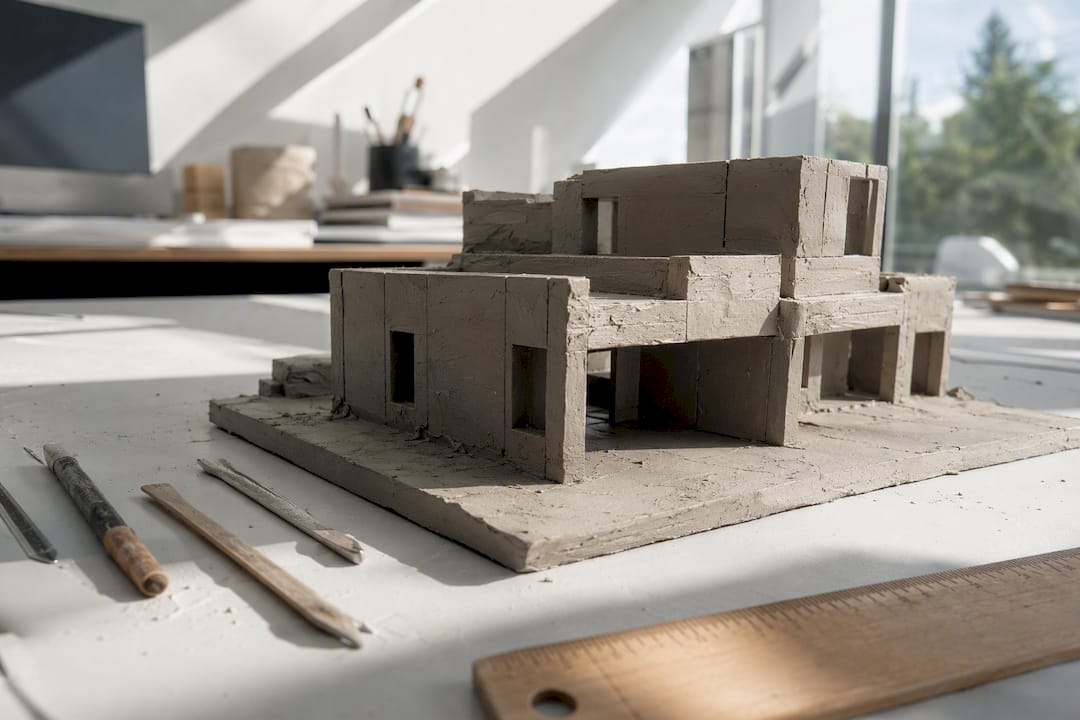
- Clay or geometry preview. A greyscale, untextured model showing camera angle, massing, and composition. This is the cheapest point in the whole process to fix a wrong viewpoint or an incorrect roofline, because locking massing and camera here avoids full re-modelling once texturing begins.
- Full draft review. Materials, lighting, landscaping and atmosphere go in. This is where the bulk of your revision requests should land, since these elements are relatively cheap to adjust without touching the underlying geometry.
- Final sign-off. Colour grading, final export, and delivery formats are locked. Reopening scope after this point should trigger a new quote, not a “quick fix” conversation.
Assign one person per side as the decision-maker with editing rights over comments; everyone else should have view-only access so feedback doesn’t fragment across five inboxes.
Pro Tip: Insist on approving the clay stage in writing, even if it feels like an unnecessary extra step. A five-minute sign-off here can save two full days of re-modelling once materials and lighting are applied.
Revision versus new scope: examples you can use today

A revision adjusts something already modelled: colour, material finish, camera angle within the agreed shot list, lighting mood, minor landscaping. A new scope item adds or removes something that wasn’t in the original brief or CAD file: a new structure, an extra storey, a different building footprint, or an additional external view not on the original shot list.
Six paired examples make the line easier to apply on a live project:
- Changing render lighting from midday to dusk — revision. Adding an entirely new rear extension — new scope.
- Swapping cladding colour from grey to cream — revision. Changing the cladding material from render to brick where the geometry needs rebuilding — new scope.
- Adjusting landscaping planting — revision. Adding a new access road not on the site plan — new scope.
- Repositioning a car in the foreground — revision. Adding an extra floor to the building — new scope.
- Correcting sky colour or weather mood — revision. Requesting a viewpoint not on the agreed shot list — new scope.
- Softening reflections on glazing — revision. Redesigning the building’s massing after clay approval — new scope.
When a request falls into new scope, send the studio the specific change alongside the original file reference. That’s usually enough for a same-day quote rather than a delay while the studio works out what actually changed.
Collecting, consolidating and approving feedback
Fragmented feedback is the most common reason revision rounds run over. One client emails a PDF with comments, another calls with verbal notes, a third annotates a screenshot. The studio ends up reconciling three versions of the truth before doing any actual work.
- Use a single review board. All stakeholders comment in one place, on one version, so the studio works from a consolidated list rather than resolving conflicting instructions.
- Annotate directly on the image. Marking comments on the render itself removes the ambiguity that comes with text-only notes like “move the tree” without saying which one.
- Assign roles clearly. One or two editors who can approve changes; everyone else views and comments only.
- Keep version control tight. Every round gets a new file name and timestamp, so nobody approves an outdated draft by mistake.
- Consider a live iteration session for small jobs. A short real-time session with the artist can resolve minor adjustments faster than a formal round, though it suits quick tweaks rather than structural changes.
Cloud-based review tools that combine annotated comments, reference images and role permissions noticeably cut the back-and-forth compared with email threads, and they leave an audit trail if a dispute over scope ever comes up.
Pricing, turnaround and scheduling around revisions
Each standard revision round typically takes a set number of working days, agreed at the quote stage, and that clock should only run while the ball is in the studio’s court. If you sit on a draft for a week before responding, that delay pushes the whole schedule back, not just your round.
- State turnaround per round explicitly in the quote, e.g. “three working days per revision round from receipt of consolidated feedback.”
- Define a client hold period. If feedback isn’t returned within an agreed window, the delivery date moves accordingly rather than the studio absorbing the delay.
- Choose a fair charging model for extra rounds. Studios typically use one of three approaches: a flat fee per additional round, an hourly rate for artist time, or itemised pricing per individual change. A flat fee suits small tweaks; hourly billing suits open-ended exploratory changes.
- Put the fee structure in writing before work starts, not after the included rounds run out.
Why the clay stage matters most: approving camera angle and massing before texturing begins is the cheapest point in the entire process to change your mind. Requesting the same change after final lighting and materials are applied usually means rebuilding, not adjusting, and that’s what pushes a project into new-scope pricing.
A clause checklist and sample wording for your quote or terms
Copy these lines into a quote, statement of work, or supplier terms, and adjust the specifics to your project.
- “This quote includes two revision rounds following the full draft review.”
- “A revision adjusts materials, colour, lighting or camera angle already agreed at clay stage. Structural, geometric or shot-list changes are new scope and quoted separately.”
- “Feedback must be submitted as a single consolidated list via the shared review board within five working days of delivery.”
- “Each revision round is delivered within three working days of receipt of consolidated feedback.”
- “Additional rounds beyond those included are billed at [agreed flat fee/hourly rate].”
- “Final sign-off is recorded against the file name, approver name and date.”
| Checklist item | Where it sits in the policy |
|---|---|
| Rounds included | Scope and pricing section of quote |
| Revision vs new scope definition | Terms and conditions |
| Response SLA | Quote or statement of work |
| Extra work fee structure | Quote or terms |
| Sign-off record | Project file naming convention |
How Visual Trick applies this policy on real projects
Visual Trick builds two to three revision rounds into every quote and treats clay-stage approval as a genuine decision gate, not a formality. On a recent housing scheme, locking camera angle and massing at clay stage meant the client’s later request to shift the viewpoint cost nothing, because the geometry hadn’t been textured yet. Had that request come after final sign-off, it would have meant a partial rebuild. When you commission a studio, ask to see the clay stage before anything else gets built out; it’s the one checkpoint that protects your budget more than any other.
— Paride
Ready to commission with clear revision terms?
If you’ve been burned by open-ended “unlimited revisions” quotes that quietly turn into six-week delays, the fix isn’t more rounds. It’s a studio that tells you upfront exactly what’s included, locks decisions at the clay stage, and charges fairly for anything genuinely new. Visual Trick works this way as standard on planning and marketing commissions, with consolidated feedback handled through one review point rather than scattered email threads.
Every quote sets out included rounds, turnaround per stage, and the point at which a request becomes new scope, so there’s nothing to renegotiate midway through your project. If you’re ready to brief a project, get a quote through Visual Trick’s 3D rendering services page and have your revision terms confirmed before work begins.
Sources
- Revisions in 3D Rendering: How Many Rounds Are Normal? | MR Rendering – CGconnect
- Client sign-off: Enscape & Chaos Cloud collaboration workflow — Chaos blog
- How To Collect Client Feedback On Renders In Lumion Cloud – Lumion
- Client revisions: a saner design iteration workflow | ArchitectGPT
