
Budget-tier interior CGI runs roughly $250 to $600 per image, mid-tier studio work sits between $600 and $2,500, and premium hero shots can exceed $8,000 each. The final figure hinges on scene complexity, image count, and which production model you choose. Before requesting quotes, count your images and decide the fidelity level you actually need.
TL;DR:
- Budget interior CGI at around $250-$600 per image suits early concept reviews with basic scenes and limited camera angles.
- Mid-tier studio work ranges from $600-$2,500 per image, offering custom materials and lighting suited for marketing or planning submissions.
- Premium images exceeding $2,500 involve bespoke modeling and art direction, ideal for flagship developments and investor presentations.
- Scene complexity, source files, and resolution significantly impact costs, with CAD files and fewer angles reducing expenses.
- Rush jobs under seven days typically incur a 25-50% surcharge, making realistic timelines crucial for controlling project costs.
Table of Contents
- Interior CGI cost at a glance: budget, mid-tier and premium
- What affects interior CGI cost: the detailed cost drivers
- Pricing by production model: freelancer, studio, in-house or AI
- What a proper interior CGI quote should include
- Budgeting examples: what small, medium and large projects actually cost
- How to reduce interior CGI cost without cutting corners
- Commissioning notes: what a Visualtrick quote typically includes
- Who should choose which production route
- Request a Visualtrick quote for your interior project
- Sources
Interior CGI cost at a glance: budget, mid-tier and premium
The price you pay tracks almost exactly with what the image is for. A quick internal sense-check for a design review needs far less polish than a hero shot for a property brochure, and studios price accordingly.
- Budget (roughly $250–$600 per image): simpler rooms, standard furniture libraries, fewer camera angles. Fine for early concept sign-off or internal stakeholder reviews.
- Mid-tier ($600–$2,500 per image): the range most residential interior renders fall into. Custom materials, considered lighting, and enough post-production to use the image in marketing or a planning submission.
- Premium ($2,500–$8,000+ per image): bespoke modelling, art direction, and the kind of lighting work that makes an interior look genuinely lived-in. Reserved for flagship developments, investor decks, and brand campaigns where the image carries real weight.
- AI/subscription tools (roughly $20–$399 per seat, per month): not priced per image at all. Useful for rapid iteration and concept testing, less reliable for final client-facing fidelity or usage licensing.
Developers marketing a single flagship unit tend to land in premium. Architects and designers doing routine client presentations usually sit comfortably in mid-tier. Marketers running high-volume listing campaigns often blend AI tools for drafts with mid-tier studio work for the final assets.
What affects interior CGI cost: the detailed cost drivers
Every studio quote is built from the same handful of variables, and understanding them lets you control your own budget rather than just reacting to a number on a page.
- Scene complexity and object density. A minimalist bedroom with four pieces of furniture costs far less to build and light than an open-plan kitchen diner with fitted joinery, layered textiles, and dozens of small props.
- Modelling source. Supplying clean CAD or IFC files cuts modelling time dramatically compared with a studio building geometry from photos or rough sketches. This is one of the single biggest levers on price.
- Material and finish fidelity. Stock textures are quick; bespoke material matching for a specific stone, fabric, or joinery finish takes real time and pushes cost up.
- Camera count, resolution, and post-production. Each additional angle adds render and grading time. High-resolution delivery for large-format print or billboard use costs more than web-resolution files.
- Revision policy, licensing, and rush fees. Unlimited revisions rarely exist. Extra usage rights and compressed deadlines both add to the final invoice.
Pro Tip: Ask upfront whether the quote assumes a clean CAD model or reverse-engineered geometry from photos. That single distinction can swing the price by hundreds of pounds per image.
Rush jobs delivered in under seven days typically carry a 25–50% surcharge over standard turnaround pricing, so building in a realistic timeline from the outset is one of the cheapest decisions you’ll make on a project.
Pricing by production model: freelancer, studio, in-house or AI
How you procure the work matters as much as what you ask for. Each route trades price against reliability, and the right choice depends on volume and how much risk you can absorb.
- Freelancers. Best suited to a single hero image or low-volume projects, typically charging $200–$1,500 per image. Revisions are often negotiated individually rather than bundled, and availability can be unpredictable during busy periods.
- Mid-tier studios. Pricing sits in the $600–$2,500 bracket, but the premium over a freelancer often buys something less tangible than render quality: a managed pipeline, quality assurance, and an account manager who chases the deadline for you. A meaningful share of studio cost is really paying for that reliability rather than raw render time.
- Premium studios. Worth the investment when art direction and bespoke asset creation genuinely matter, such as flagship marketing campaigns or investor presentations where every image needs to look distinct.
- In-house seats. Only makes financial sense at high volume. First-year cost, once you count software licences and workstation hardware, can run into the thousands before a single billable image is produced, plus ongoing training time.
- AI/subscription platforms. Cost-per-image economics are unbeatable for iteration, at $20–$399 per seat monthly. The trade-off is fidelity and licensing clarity, which is why most teams treat AI tools as a concepting stage rather than a final deliverable.
What a proper interior CGI quote should include
A vague one-line price is a red flag. A properly structured quote breaks the fee into recognisable stages, which also protects you from disputes later.
- Core production stages: modelling, texturing, lighting, and post-production, ideally itemised rather than bundled into one number.
- Revision allowance: how many rounds are included, and the hourly or per-round rate for anything beyond that. This detail alone reduces disputes more than any other single clarification.
- Licensing terms: whether the fee covers marketing use only, planning submissions, or unlimited commercial reuse.
- Delivery specifications: file formats, resolution, and whether editable source files are included or sold separately.
- Common extras to check: bespoke furniture modelling, licensed branded props, and premium material libraries frequently sit outside the base quote.
If a studio can’t answer these five points without checking with someone else, that’s worth noting before you sign anything. Reviewing a presentation workflow guide before you brief a studio can also help you spot which of your own assets are ready to hand over and which will need extra work.
Budgeting examples: what small, medium and large projects actually cost
Numbers on a price list only become useful once you run them against a real brief. Here’s how the arithmetic typically plays out.
- Small project (1–3 images): a single show-flat interior at mid-tier pricing, three images at roughly $1,200 each, comes to $3,600. Add a 10% buffer for a second revision round on the hero shot and you’re closer to $3,960. Standard turnaround (two to three weeks) keeps you out of rush-fee territory.
- Medium project (5–10 images): modelling costs amortise across the set, so eight images at an average $900 each (cheaper per image than the small project because the base model is reused) totals $7,200. This is where volume discounts start to matter.
- Large project (20+ images or phased delivery): a large residential scheme delivered in three phases might average $700 per image across 24 images, at $16,800, with staged payments tied to each delivery batch. Compressing the full set into a two-week rush timeline would add a 25–50% surcharge on top, which on a project this size is worth negotiating around rather than absorbing.
How to reduce interior CGI cost without cutting corners
Cutting your budget doesn’t have to mean cutting quality. The cheapest images to produce are the ones where the studio spends the least time guessing.
- Supply clean, measured CAD or IFC files and material references. This single step consistently shortens modelling time more than any negotiating tactic.
- Bundle your views and prioritise hero shots. Studios usually discount per-image rates once volume climbs, so batching a project rather than commissioning one-off images saves money.
- Use AI tools for early iteration, then commission a studio for the final art-directed set. Teams running this hybrid approach have reported cutting annual visualisation spend by 40 to 60%.
- Agree fixed revision rounds and delivery formats in writing before work starts, not after the first draft lands.
- Negotiate staged deliverables for larger projects rather than paying everything upfront.
Pro Tip: Send your floor plans and a short mood reference (even three or four images pulled from elsewhere) before you ask for a quote. Studios price uncertainty as risk, and removing it usually brings the number down.
Commissioning notes: what a Visualtrick quote typically includes
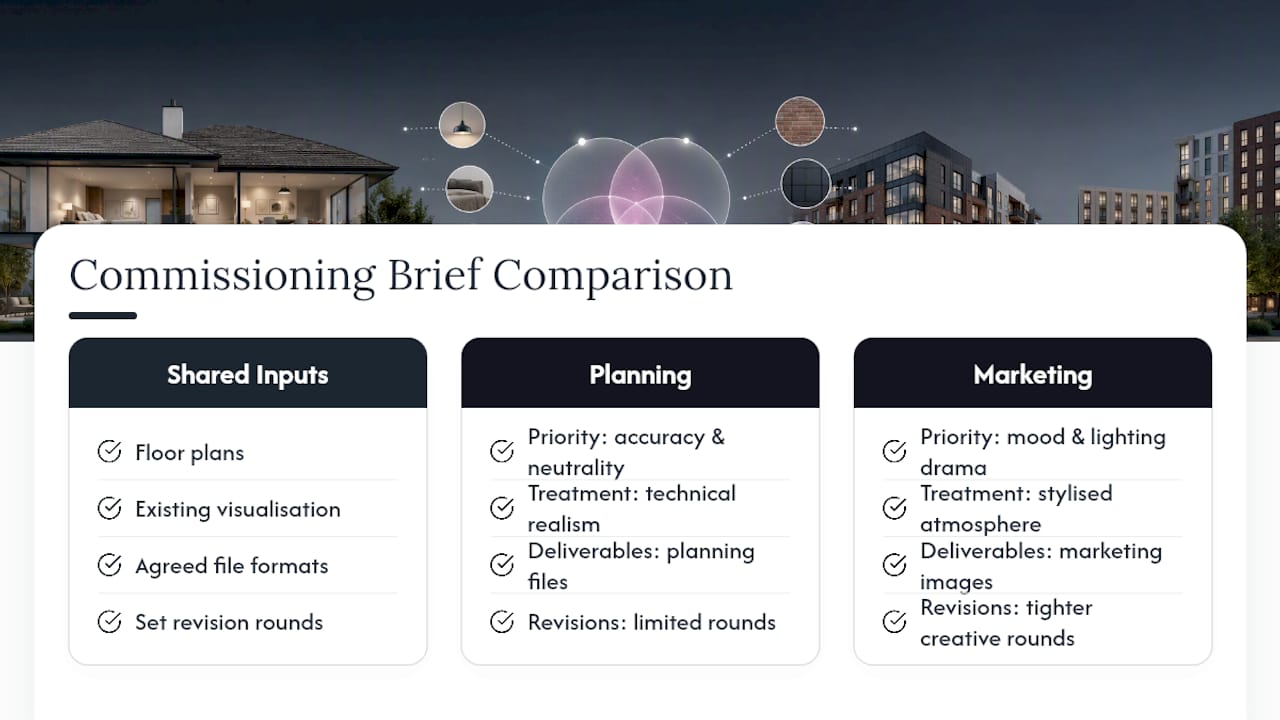
A well-structured brief speeds everything up. When commissioning interior CGI, expect a proper quote to specify planning-ready deliverables where relevant, agreed file formats and resolutions, and a set number of revision rounds rather than an open-ended promise.
Visualtrick works across planning applications, marketing campaigns, and investor materials, which means the same interior scene sometimes needs different treatment depending on its end use. A planning submission prioritises accuracy and neutrality; a marketing image prioritises mood and lighting drama. Flagging which category your project falls into at the brief stage, alongside your floor plans and any existing visualisation for planning permission, gets you a tighter, faster quote with fewer revision cycles later.
Who should choose which production route
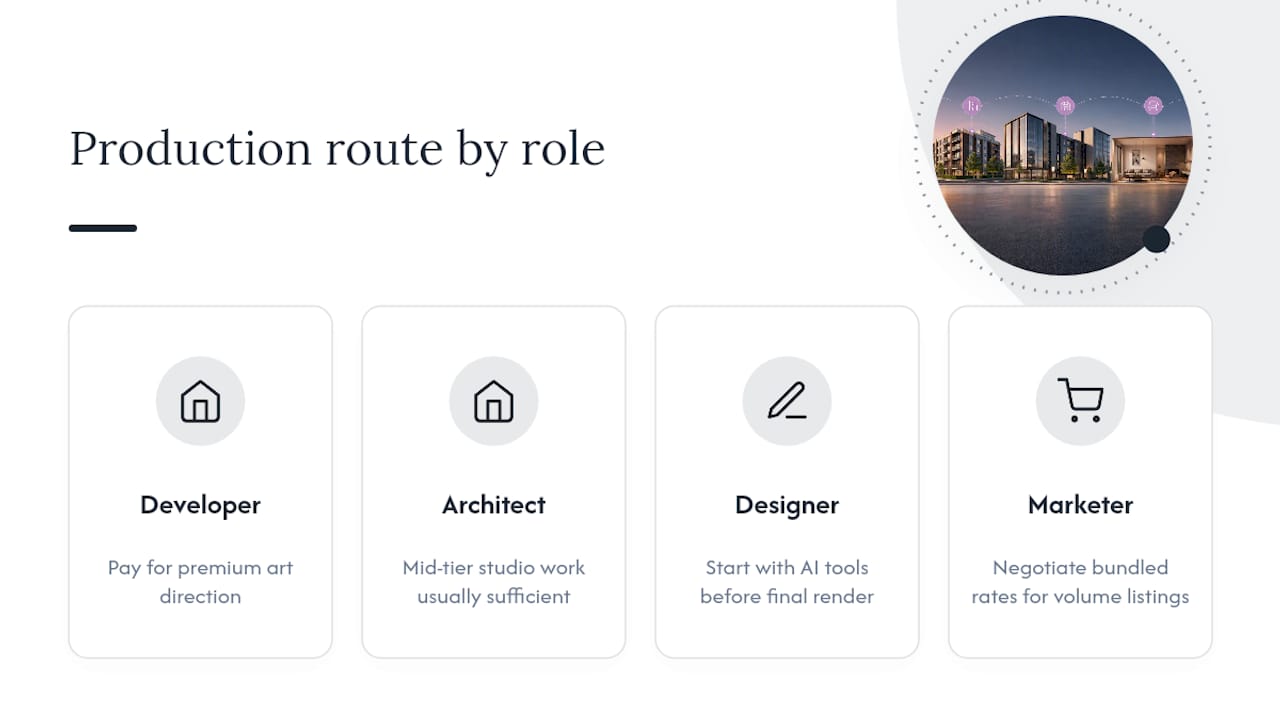
If you’re a developer marketing a single flagship unit, pay for premium art direction. If you’re an architect running routine client presentations, mid-tier studio work covers most needs without overspending. Designers iterating on material choices often do best starting with AI tools before committing budget to a final render, while marketers running volume listing campaigns should negotiate bundled rates from the outset.
Before requesting any quote, ask three things: how many images do you actually need, what’s the real deadline, and who will use the final files and for what purpose. Get those three answers straight and the rest of the budgeting conversation becomes far simpler than it first looks.
— Paride
Request a Visualtrick quote for your interior project
Interior CGI is commonly priced as a clear, project-based fee rather than a subscription or day-rate guess, which means you know the total cost before work begins rather than discovering extras at delivery. That matters most for developers and architects juggling planning deadlines alongside marketing timelines, where a vague quote can quietly derail a launch date.
To get an accurate estimate quickly, prepare your floor plans, a short list of required camera angles, and a note on end use (planning submission, brochure, investor pack). Visualtrick’s 3D Rendering Services page outlines typical deliverables and turnaround expectations, and the Architectural Visualisation Services page covers the full commissioning process. If you’re weighing up how visuals strengthen a planning application specifically, the guide on why planning authorities need accurate visuals is worth a read before you brief your project. Send over your floor plans and image count, and request a quotation directly through the provider’s team.
Sources
The headline ranges in this guide draw on the 2026 architectural rendering cost breakdown for market-wide pricing context, the 3D rendering cost guide for per-project-type ranges, and the MONA interior design rendering cost analysis for freelancer and AI subscription economics. Together they cover the full spread from budget to premium production routes.
- Architectural Rendering Cost in 2026
- 3D Rendering Cost in 2026: $250–$10,000 (Full Breakdown)
- What 3D Rendering Really Costs Interior Designers in 2026 — MONA
