
Architectural visualisation — CGI, verified photomontage, animated flythroughs and immersive walkthroughs — is one of the most direct ways to reduce planning and investment risk on a UK care-sector project. Commission it continuously from pre-application onward, not as a last-minute addition before submission. The three outputs that deliver the highest return are:
-
Planning-ready verified photomontages meeting UK Accurate Visual Representation (AVR) standards
-
Photorealistic exterior and interior CGIs for investor pitch decks and JV proposals
-
Short flythroughs or VR walkthroughs for operator presentations and off-plan marketing
Table of Contents
- Why does visualisation matter for UK care-sector planning and investment?
- Which visual formats suit care projects, and when?
- What do planning officers expect from planning-ready visuals?
- How does visualisation reduce risk and increase investor confidence?
- What should your commissioning brief include?
- Key takeaways
- Why continuous visualisation changes the outcome on care projects
- Visualtrick: planning-ready CGI for care-sector projects
Why does visualisation matter for UK care-sector planning and investment?
Planning committees, local consultees and institutional investors share one problem: they cannot read technical drawings. A verified photomontage showing a proposed care home within its actual street context communicates in seconds what a site-plan section takes minutes to misinterpret. That gap in comprehension is where projects stall, and where good visualisation earns its cost.
Digital storytelling techniques that frame visuals around patient experience and community benefit consistently improve stakeholder engagement in health and care projects. Parish councils and local consultees respond to images that show how a building sits within the neighbourhood, how landscaping softens the massing, and how residents will experience the entrance and gardens. Framing the narrative around community benefit rather than developer gain shifts the conversation.
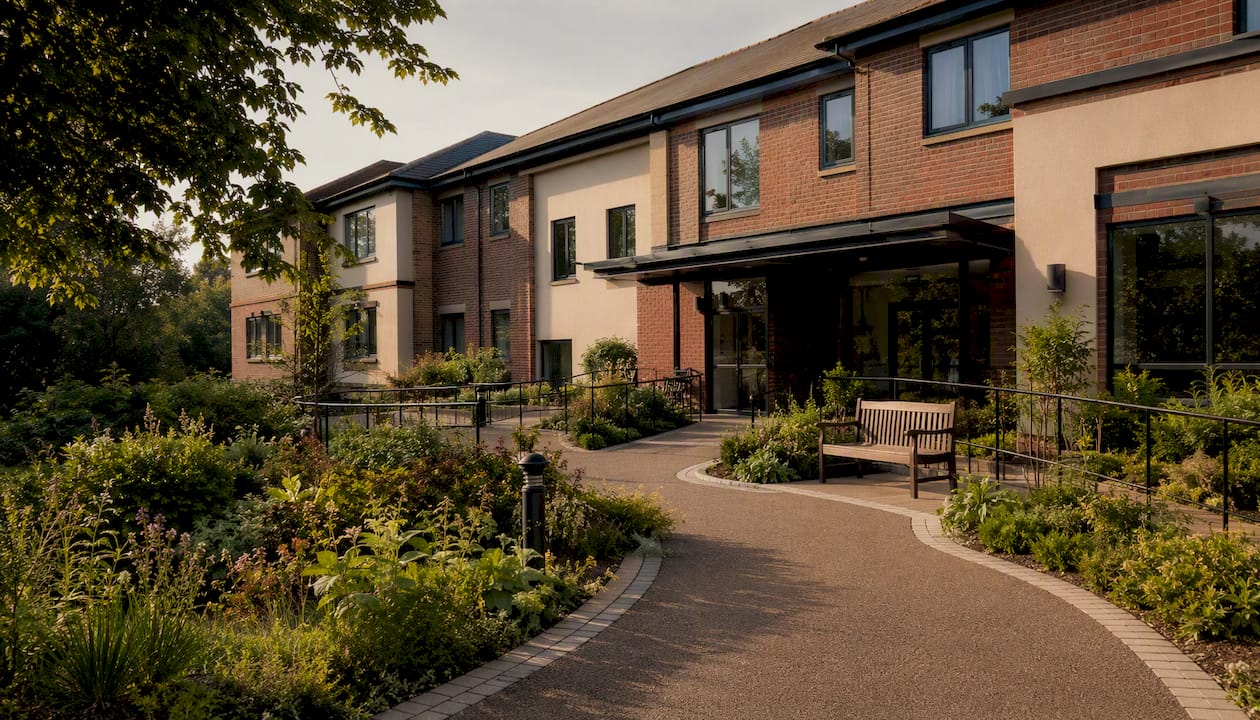
For investors, the picture is equally clear. Institutional appetite for senior housing is strong, but credit funds and equity investors are financing schemes where sustainability credentials are visible and verifiable. EPC A ratings, BREEAM Very Good certification, photovoltaic panels and air-source heat pumps need to appear in the visuals, not just the energy statement. A render that shows PV arrays on the roof, EV charging bays in the car park and a biodiverse landscape scheme communicates ESG performance to a non-technical investment committee far more effectively than a spreadsheet.
Which visual formats suit care projects, and when?
The format you choose should follow the decision you need to influence, not the budget you have left.
- Interior CGI: — Care suites, lounges, dining rooms and corridors. Critical for operator sign-off and for demonstrating care quality to investors and CQC-aware stakeholders.
Pro Tip: Resist the urge to commission final-quality marketing renders at the pre-app stage. A massing model that can be revised in hours is more useful than a polished image that locks the design in the client’s mind before the planning officer has seen it. Save the high-fidelity work for post-pre-app, once the massing is agreed.
What do planning officers expect from planning-ready visuals?
A planning officer reviewing a care-home application expects visuals that are technically accurate, not aspirationally beautiful. The technical workflows used for hospital planning translate directly to care homes: verified viewpoints, accurate scale, and documented methodology.
A planning-ready visualisation pack should include:
- Agreed viewpoints confirmed with the LPA’s planning or landscape officer before commissioning
- AVR Level 2 or Level 3 methodology statement documenting camera position, lens data and DEM/OS elevation alignment
- Verified photomontages with accurate scale, correct viewpoint metadata and composite overlays showing tree lines and sightlines
- Seasonal winter views from the same viewpoints as summer views
- PDF and print-ready exports at the resolution specified in the LPA’s validation checklist
Sustainability elements belong in the visuals, not just the energy statement. Show PV panels, ASHP plant locations, EV charging bays, SuDS features and native planting schemes in the CGIs and annotated views. This gives planning officers and ecology consultees something concrete to assess.
Pro Tip: Contact the LPA’s planning officer and landscape officer before commissioning verified views. Confirm the agreed viewpoints in writing. Changing viewpoints after a verified photomontage is complete means starting again, which doubles the cost and the timeline.
How does visualisation reduce risk and increase investor confidence?
Accurate visuals materially reduce perceived risk for financiers. An investor reviewing a care-home scheme without CGI is being asked to commit capital to an abstraction. A photorealistic exterior render, a verified street-scene montage and a walkthrough of the care suites convert that abstraction into something they can evaluate, share with their investment committee and present to a lender.
Institutional investors financing senior housing are increasingly requiring visual evidence of sustainability performance alongside financial projections. A render showing BREEAM-compliant landscaping and visible renewable energy infrastructure is no longer a nice addition to a pitch deck. It is part of the due diligence pack.
The visualisation benefits for joint venture proposals are equally concrete: earlier capital commitments, stronger JV negotiations and clearer value-engineering decisions when visuals are used from the outset. A developer who arrives at a JV negotiation with a full CGI pack, a verified planning montage and a flythrough is in a different conversation from one who brings only a planning drawing set.
Investor-facing outputs to prepare for a care-sector funding round:
-
Photorealistic exterior and aerial CGIs for the investment memorandum
-
Interior CGIs of care suites, lounges and dining spaces demonstrating care quality
-
Annotated sustainability renders showing EPC/BREEAM features
-
Short flythrough for the investment committee presentation
-
Verified planning montages confirming planning-readiness to lenders
What should your commissioning brief include?
A clear deliverables table and brief reduces scope creep and ensures visuals match planning documentation and marketing needs. A vague brief produces visuals that look good but fail at the planning counter or confuse the investor.
Include in your RFP or brief:
- Target viewpoints with OS grid references and agreed AVR level
- Reference photographs taken from each viewpoint (date, time, weather conditions)
- CAD or BIM exports at the agreed LOD (Level of Development)
- Confirmed rights and usage: planning, marketing, JV materials, press
- Number of review rounds and sign-off process
- File format requirements: TIFF/PDF for planning, JPEG/MP4 for marketing
| Package | Typical deliverables | File formats | Review rounds |
|---|---|---|---|
| Pre-app massing pack | 3–5 massing views, simple materials | JPEG, PDF | 2 |
| Planning AVR pack | 2–4 verified photomontages, seasonal views, methodology statement | TIFF, PDF | 2–3 |
| Investor pitch pack | 4–6 exterior/interior CGIs, short flythrough | JPEG, MP4 | 2 |
| Marketing pack | 6 CGIs, VR walkthrough, aerial view | JPEG, MP4, VR file | 3 |
Rights and licensing matter. Confirm at brief stage that the images may be used across planning documents, investor materials and JV proposals without additional fees.
Key takeaways
Architectural visualisation is a risk-management tool for UK care-sector projects: commission it continuously from pre-application onward to protect planning outcomes, accelerate investor decisions and prevent costly late redesigns.
| Point | Details |
|---|---|
| Start at pre-application | Commission massing studies before the pre-app meeting, not after, to allow genuine iteration with the planning officer. |
| Confirm viewpoints in writing | Agree verified photomontage viewpoints with the LPA before commissioning to avoid costly remakes. |
| Show sustainability visually | Include PV, ASHP, EV charging and biodiversity features in CGIs to satisfy planning officers and institutional investors. |
| Prepare a full investor pack | Exterior CGIs, interior renders and a short flythrough materially improve capital commitment timelines on care schemes. |
| Use Visualtrick for care-sector CGI | Visualtrick delivers planning-ready care-home CGI covering verified photomontages, investor packs and marketing visuals. |
Why continuous visualisation changes the outcome on care projects
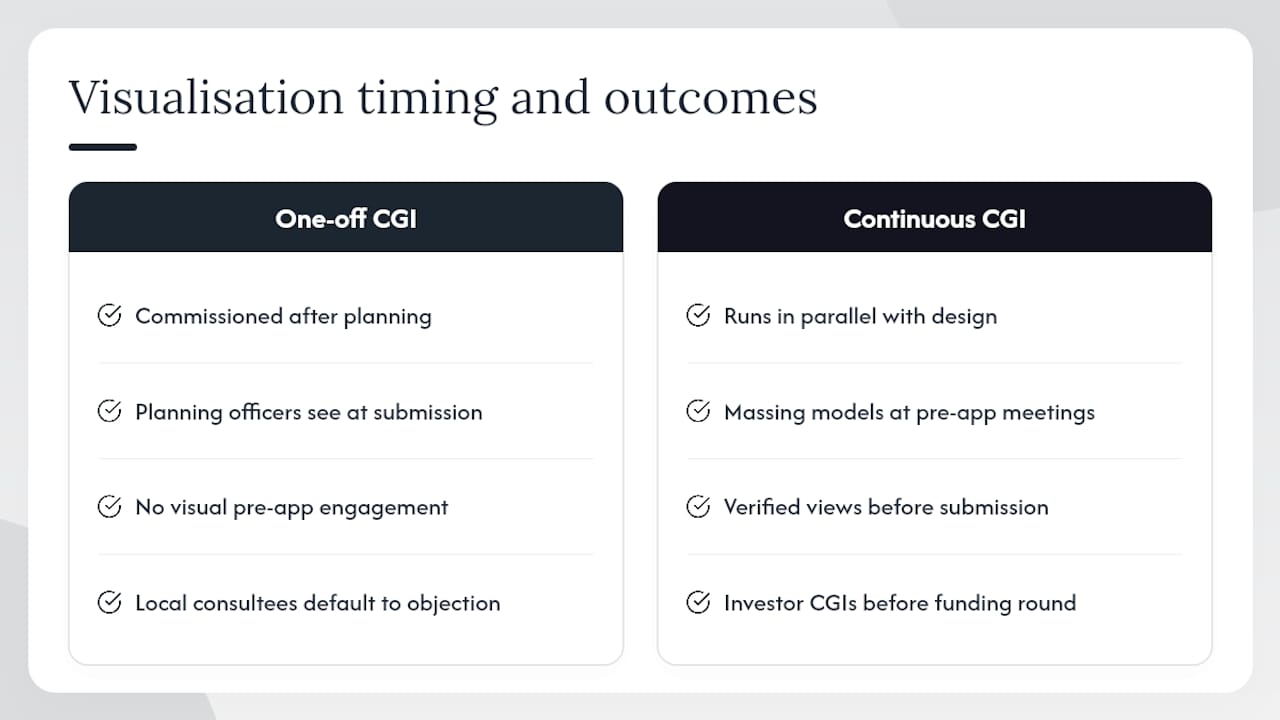
The conventional wisdom treats CGI as a marketing tool: something you commission once the planning is done and the scheme is ready to sell. On care-sector projects, that framing costs money. Planning officers who see a scheme for the first time at submission, without any visual pre-app engagement, are being asked to make a decision cold. Local consultees who receive a planning notice without any community-facing visuals default to objection. Investors who receive a financial model without a single render are being asked to imagine a building they cannot picture.
The projects that move fastest through planning and funding are the ones where the visualisation programme runs in parallel with the design, not behind it. Massing models shared at pre-app meetings give planning officers something to respond to. Verified views prepared before submission give landscape officers confidence in the methodology. Investor CGIs prepared before the funding round give capital committees something to approve rather than something to question.
The care sector has specific pressures that make this more urgent, not less. CQC registration, operator procurement, covenant requirements and ESG reporting all create stakeholders who need visual evidence of quality. A care home that looks like a care home in the CGI, with visible communal spaces, legible entrances and credible landscaping, communicates operational intent in a way that a floor plan cannot.
Visualtrick: planning-ready CGI for care-sector projects
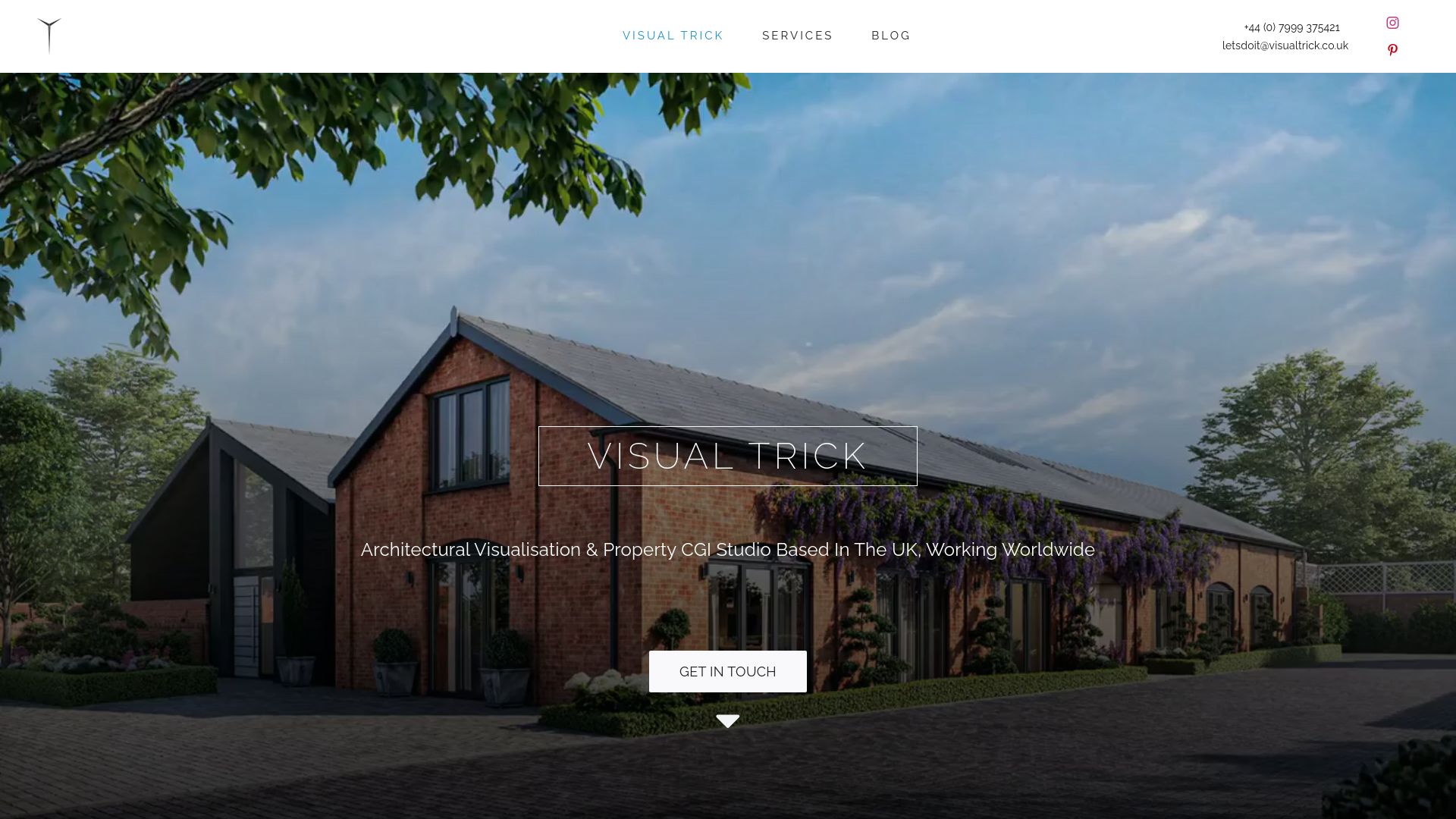
Visualtrick produces care-home CGI built for the full project lifecycle: verified photomontages for planning submissions, photorealistic exterior and interior CGIs for investor decks, and flythroughs and VR packages for operator presentations and off-plan marketing. Every visual is checked against the current drawing set and delivered with the documentation planning officers and landscape consultees need.
For CGI for care operators and retirement developers, Visualtrick structures work in phases aligned to your programme, so the right visual is ready at the right stage. Whether you need a pre-app massing pack this month or a full investor pitch suite before a funding round, get in touch to discuss a bespoke brief.
