
Visual evidence wins planning appeals when it is accurate, verifiable and used to support expert testimony, not replace it. That is the core finding across appeal proofs, planning guidance and communication research alike. The single rule that governs everything else follows from it: accuracy and traceability come before aesthetics, every time.
A photorealistic image with the wrong field of view is worse than no image at all, because it invites the inspector to distrust everything else in your evidence bundle. The Planning Inspectorate’s procedural guidance and the Landscape Institute’s GLVIA3 methodology exist precisely to stop persuasive imagery from substituting for verifiable fact.
Here is what actually moves the needle in an appeal:
- Clarity: a well‑framed Key Observation Point image resolves disputes about scale and massing faster than paragraphs of prose.
- Memory: inspectors and committee members retain visual information alongside spoken argument far better than oral testimony alone, a point communication research on combined visual and oral delivery/12%3A_Preparing_to_Speak_and_Managing_Apprehension/12.02%3A_Visual_Aids) backs up repeatedly.
- Objectivity: metadata, GPS logs and verified photomontage workflows turn a picture into an exhibit an opposing party struggles to contest.
- Dispute resolution: appeal proofs that cite GLVIA3 and TG 06/19 directly tend to pre‑empt the “your visuals are misleading” argument before it starts.
Get the technical foundations right and the visuals do genuine evidential work. Get them wrong and you have handed the other side a free line of attack.
Key Takeaways
Visual evidence strengthens a planning appeal only when it is accurate, verifiable against agreed standards, and used to reinforce expert testimony rather than replace it.
| Point | Details |
|---|---|
| Accuracy before aesthetics | Agree KOPs, disclose camera settings and match field of view to human vision before commissioning any image. |
| Verification builds admissibility | Metadata, chain of custody and documented workflows are what separate accepted evidence from discounted evidence. |
| Common pitfalls are checkable | Stitching distortion, missing before-and-after views and undisclosed edits are the specific grounds inspectors cite for discounting visuals. |
| Visuals support, never replace, witnesses | Brief expert witnesses to reference visuals selectively, and rehearse for technology failure at hearings. |
| Budget with buffers | Build a two to three week buffer between visual evidence deadlines and appeal submission to absorb KOP agreement delays. |
| Commission with a specialist studio | Visualtrick produces verified photomontage, CGI and LVIA visual packages built around GLVIA3 and Planning Inspectorate expectations from the brief stage. |
Table of Contents
- What counts as visual evidence in a planning appeal?
- What guidance and standards do planning inspectors expect?
- How do inspectors evaluate the reliability of visual evidence?
- How should planning-grade visuals be produced?
- How do you present visuals in an appeal submission and hearing?
- What do planning-grade visuals typically cost and take to produce?
- What does the evidence show about visuals in real appeals?
- Why does presentation quality affect how credible your visuals seem?
- How I brief a visualisation studio for appeal work
- How Visualtrick supports planning-grade visual evidence
- Sources
What counts as visual evidence in a planning appeal?
Not every image carries the same weight, and inspectors know the difference instantly. Nine categories turn up repeatedly in appeal bundles, each suited to a different kind of argument.
- Photomontage — a photograph with the proposed development inserted at true scale from an agreed viewpoint. Used constantly for “what will this actually look like from the road” arguments.
- Verified CGI / 3D visualisation — computer‑generated imagery calibrated against real camera data, lens specification and site survey points. This is the standard for contested massing, height or daylight arguments.
- LVIA visualisations — the family of images produced under a formal Landscape and Visual Impact Assessment, typically including baseline, proposed and cumulative views.
- Key Observation Point (KOP) images — photographs taken from viewpoints agreed in advance with the local planning authority, forming the backbone of any landscape argument.
- Wireframes and axonometric diagrams — line-based technical drawings that show geometry without the persuasive gloss of a rendered image, often used to demonstrate massing without triggering accusations of “dressing up” the scheme.
- Physical models — still used for committee presentations and public inquiries where a tactile, three-dimensional object settles disputes that flat images cannot.
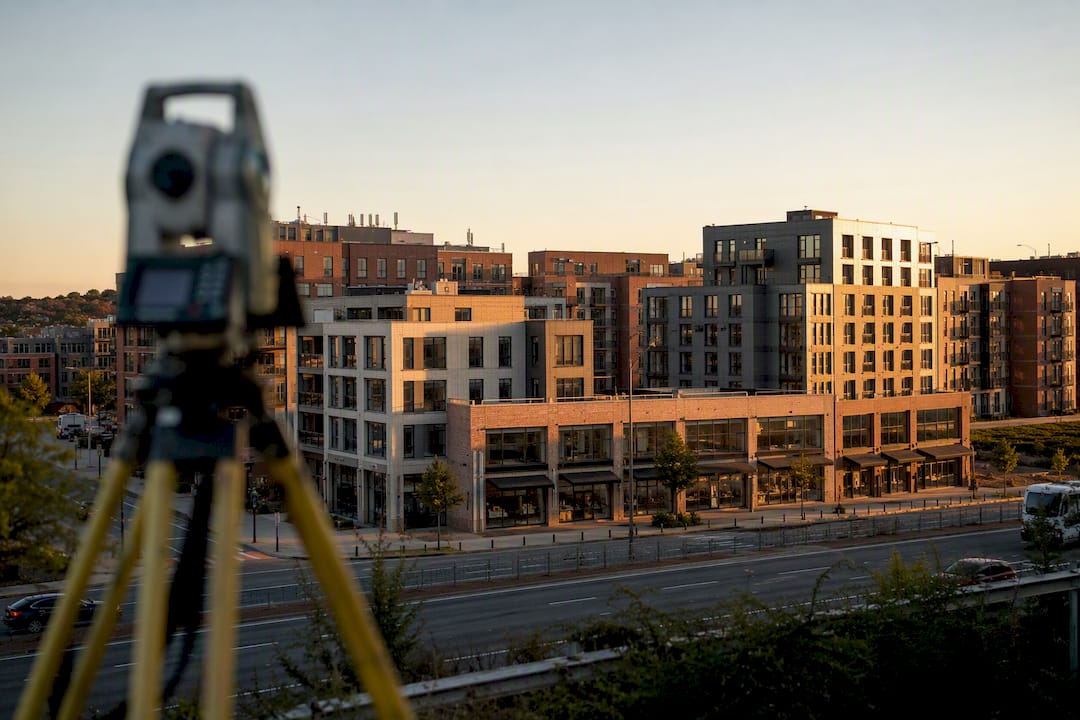
- Aerial orthomosaics and drone imagery — georeferenced composite images that establish boundaries, levels and site extent objectively.
- Time-series imagery — sequential photographs or renders across a construction period or seasonal cycle, useful for cumulative impact and cumulative change arguments.
- Annotated maps and diagrams — the least glamorous category but often the most decisive, particularly for boundary, access and drainage disputes.
A photomontage does the heavy lifting for viewpoint comparisons: “here is the view today, here is the view with the scheme built.” A drone orthomosaic earns its place when the argument concerns boundaries or the true extent of a site, because embedded GPS metadata and flight logs create a chain of custody that ground-level photography rarely offers.
Three of these categories routinely need formal verification before an inspector will give them full weight: photomontage, verified CGI and drone imagery. Verification generally means three things together: metadata that proves when and where the image was captured, calibration data confirming the camera and lens settings used, and a documented chain of custody from raw capture to final deliverable. Skip any one of the three and you invite the challenge that undoes most weak visual evidence: “how do we know this is accurate?”
What guidance and standards do planning inspectors expect?
Inspectors do not judge visuals on how convincing they look. They judge them against a specific set of technical and procedural standards, and appeal proofs that ignore those standards get picked apart in cross‑examination.
The Landscape Institute’s GLVIA3 methodology sets the baseline for landscape and visual assessment work in the UK, and appeal proofs cite it constantly. It expects agreed KOPs, a defined field of view matched to normal human vision, and a documented process for how a photomontage was produced, from base photograph to final composite. The Planning Inspectorate’s own procedural guidance reinforces this by treating undocumented or unagreed viewpoints as inherently weaker evidence, whatever the visual quality of the final image.
A proof of evidence submitted in a Sheffield housing appeal shows exactly how this plays out in practice. The landscape witness’s proof leant directly on GLVIA3 and the related technical guidance note TG 06/19 to challenge the appellant’s photomontages:
The appellant’s photomontages exhibit stitching and lens distortion inconsistent with the methodology set out in GLVIA3 and TG 06/19, and no ‘before and after’ comparative views have been provided for the agreed key observation points.
That single paragraph did more damage to the appellant’s case than any amount of narrative argument could have undone, because it converted a subjective disagreement about “does it look bad” into an objective, checkable procedural failing.
When inspectors and expert witnesses assess whether visual evidence meets the expected standard, they are typically working through a checklist that covers:
- Camera make and settings disclosed alongside the image, not withheld as “commercially sensitive”
- Horizontal field of view matched to the human eye (roughly 50 to 60 degrees for a single frame, wider views built from multiple stitched frames only when the stitching method is documented)
- A verified photomontage workflow with traceable steps from base photograph through to final composite
- KOP agreement with the local planning authority, secured in writing before the images are produced, wherever the LPA has requested it
GLVIA3 also flags when a more rigorous visualisation type is expected rather than optional. For sensitive sites or large housing schemes, the guidance points towards Type 3 visualisations, meaning full photowires or photomontages rather than simple massing sketches, a distinction the Sheffield proof of evidence also draws on when arguing the appellant’s simplified visuals fell short of what the site warranted.
Property developers commissioning visuals for a contentious site should treat that Type 3 threshold as the default assumption, not the exception. A verified views approach, produced against these standards from the outset, tends to survive scrutiny far better than visuals retrofitted with verification data after an inspector or opposing consultant raises questions.
How do inspectors evaluate the reliability of visual evidence?
Inspectors ask a consistent set of questions before they give a visual any evidential weight, and most of those questions are entirely predictable if you know where to look.
Representativeness of the viewpoint comes first: is this KOP one the parties actually agreed, or one the applicant chose because it flatters the scheme? Correct horizontal field of view matters just as much, because a wide-angle lens compresses distance and shrinks apparent scale, which is precisely why so many appeal proofs single out lens distortion as a specific ground for discounting an image. Seasonality matters too. A summer view with full tree cover tells a different story to a winter view with bare branches, and an inspector who spots only one season in the evidence pack will usually ask why the other is missing.
Scale and proportion accuracy get checked against the planning drawings, and any mismatch, however small, becomes a credibility problem for every other visual in the bundle. Metadata and traceability establish whether the image can be independently checked at all. Independence and objectivity come down to whether the preparer has disclosed every enhancement, crop and adjustment made to the base photography, because an undisclosed change is treated far more harshly than a disclosed one, even where the underlying accuracy is identical.
The common pitfalls that get visual evidence discounted tend to repeat across appeals:
- Panoramic stitching that quietly distorts scale or perspective without disclosure
- Wide-angle lens distortion that compresses or exaggerates apparent massing
- Missing “before and after” photomontage pairs, leaving the inspector to imagine the baseline
- No metadata at all, which converts a potentially strong exhibit into an unverifiable assertion
- Undisclosed visual enhancements, whether lighting, colour grading or selective cropping
- Visuals presented as a substitute for expert evidence rather than an illustration of it
The Sheffield appeal proof referenced earlier criticised the appellant on several of these grounds simultaneously, which is why the case is worth studying rather than treating as an isolated example. Stitching errors and missing comparative views were not minor stylistic complaints. They were the specific basis on which the landscape witness argued the photomontage evidence should carry reduced weight.
Pro Tip: Ask your visualisation supplier to disclose every editing step in writing before you submit anything, even the ones that seem cosmetic. An inspector who catches one undisclosed change will assume there are others, and that assumption is very hard to reverse once formed.
How should planning-grade visuals be produced?
Producing evidence that survives cross‑examination starts long before anyone opens a rendering package. It starts with an agreement about what is being shown and from where.
- Agree Key Observation Points with the local planning authority or its consultant before any photography or modelling begins. Retrofitting agreement after the images exist rarely satisfies an inspector who wants to see the agreement predated the production work.
- Record and disclose camera settings for every base photograph: make, model, focal length and any post‑processing applied.
- Match horizontal field of view to normal human vision, rather than the widest angle the lens allows, and document any stitching methodology used to build a wider composite.
- Capture both winter and summer views where vegetation or seasonal screening genuinely affects the visual impact, particularly for landscape‑sensitive sites.
- Supply a verified photomontage workflow with source files retained, not just the final composite image.
- Include full metadata and flight logs for any aerial or drone imagery, covering GPS coordinates, altitude, timestamps and pilot certification.
On the technical specification side, the numbers matter more than most clients expect. A base photograph intended for photomontage work typically needs a focal length equivalent to a standard 35mm to 50mm lens on a full-frame camera, because anything wider introduces the compression that inspectors flag as distortion. Drone imagery destined for an orthomosaic or a high-resolution site context image generally needs 4K capture as a minimum, with HDR bracketing where lighting conditions on the day are uneven. Deliverables worth insisting on in a brief include layered source files (not flattened JPEGs), a georeferenced orthomosaic where drone survey work has been carried out, and a calibrated photomontage file that keeps the base photography and the inserted model as separate, checkable layers.
Verification and traceability come down to paperwork as much as pixels. For drone-derived evidence, that means timestamped capture logs, GPS coordinates embedded in the file metadata, and the operator’s CAA pilot certification kept on file. Hobbyist drone footage without that documentation is routinely given far less weight than professionally logged imagery, even when the footage itself looks identical to an untrained eye. For photomontage and CGI work, traceability means keeping the raw base photographs, the survey data used for scale calibration, and every intermediate render, so the full production chain can be reconstructed if challenged.
Pro Tip: When you brief a visualisation studio for appeal work, ask explicitly for the chain-of-custody documentation as a deliverable, not an afterthought. Studios that treat verification as a core part of the brief, rather than a favour they will do if asked nicely, tend to produce evidence that survives scrutiny. Services offering CGI for planning applications should build this into the standard workflow rather than charging it as an extra.
Red flags worth watching for in supplier samples include stock lighting presets that make every image look identical regardless of actual site conditions, an unwillingness to share source files, and any hesitation about disclosing which parts of an image were photographed versus modelled. A studio confident in its own accuracy will show you the working, not just the finished picture.
How do you present visuals in an appeal submission and hearing?
Getting the production right is only half the job. Visuals that never make it properly into the written appeal, or that get mishandled at a hearing, waste all the work that went into commissioning them.
For the written submission, treat the visual evidence appendix with the same rigour as the written proof of evidence itself:
- Label every image with the KOP reference, capture date and camera details
- Caption each photomontage or render with a plain description of what it shows and from where
- Include a short verification statement confirming the methodology used, referencing GLVIA3 where relevant
- Provide source files in appendices, not just the flattened images used in the main body
- Use a consistent file naming convention that cross‑references the numbered exhibits in your proof of evidence
At a hearing or public inquiry, presentation discipline matters almost as much as production quality. Bring both printed boards and a digital backup, because relying solely on a laptop and projector is an unnecessary risk on the one day it genuinely matters. Rehearse with the expert witness beforehand so the visuals prompt specific points rather than becoming a slide show the witness reads from. Plan for the projector failing, because it happens more often than anyone likes to admit, and a witness who can talk the panel through a printed board without missing a beat looks considerably more credible than one left stranded by a dead laptop battery.
The instruction to give an expert witness matters more than most briefs acknowledge: visuals exist to support the testimony, never to replace it. A witness who narrates every slide word for word loses the room. A witness who gestures to the relevant KOP image at the exact moment it clarifies a disputed point of scale gains authority instead of losing it. If an opposing expert disputes the accuracy of an image mid‑hearing, the correct response is to point directly to the verification statement and metadata already lodged in the appendix, not to argue from memory about how the image was made.
Pro Tip: Give your expert witness a one-page index of every visual exhibit with its KOP reference and page number before the hearing, so they can find the right image in seconds rather than flicking through an entire bundle while the panel waits.
What do planning-grade visuals typically cost and take to produce?
Budgeting for appeal-ready visuals means planning for a range, not a fixed number, because site complexity and the level of verification required both swing the price significantly.
A single verified photomontage for a straightforward site, with an agreed KOP and standard verification documentation, sits at the lower end of the cost scale and can typically turn around within one to two weeks of the base photography being taken. A full verified CGI image, calibrated against survey data and produced with layered source files, takes longer and costs more, particularly where multiple viewpoints or seasonal variants are required. A small drone survey producing a georeferenced orthomosaic adds its own cost and timeline, driven partly by weather windows for the flight and partly by the post-processing needed to produce a clean, metadata-rich deliverable. A full LVIA visual package, covering multiple KOPs, baseline and proposed views, and often a cumulative assessment, represents the largest and slowest deliverable in this list.
Several factors push cost and time up beyond the baseline:
- Site complexity, particularly where multiple viewpoints or a wide field of view are needed to capture the full context
- KOP agreement delays, since waiting on a local planning authority or consultant to confirm viewpoints can add weeks before production even starts
- Verified workflow requirements, which take longer to document than an unverified image but pay for themselves the moment an opposing party challenges accuracy
- Rushed delivery premiums, which most studios apply when an appeal deadline compresses a normally multi‑week process into days
Commissioning a single hero image is cheaper upfront than a full visual package, but appeals rarely turn on a single image. Building in a two to three week buffer between your visual evidence deadline and your actual appeal submission deadline avoids the scramble that produces rushed, poorly verified work. It also leaves room to fix the inevitable query from a planning consultant who wants one more angle covered.
What does the evidence show about visuals in real appeals?
The clearest lessons come from appeal proofs that address visual evidence directly, rather than from general guidance about best practice.
The Sheffield housing appeal referenced earlier is instructive precisely because the criticism was specific and technical rather than a vague complaint about quality. The landscape witness’s proof identified lens and stitching distortion inconsistent with GLVIA3 methodology, and separately flagged the absence of “before and after” comparative views for the agreed KOPs. Both criticisms were checkable facts, not matters of taste, which is exactly what makes them dangerous to an appellant who has not documented their process.
On the research side, a 2026 study proposing an integrated Visual Impact Assessment framework makes a related point from a different direction. It argues that combining GIS visibility analysis, KOP-derived eye-level evidence and time-series visualisations gives decision makers a measurable, stage-comparable picture of cumulative change, rather than a collection of disconnected snapshots. That matters for any appeal involving phased development or incremental change, where a single “before and after” pair cannot capture how a site evolves across several planning permissions.
An integrated approach linking spatial visibility diagnostics with observed viewpoint evidence allows a reference band to be set against which incremental development impacts can be measured, rather than assessed in isolation.
The practical lesson from both examples is the same, even though one comes from a contested appeal and the other from academic research: isolated, unverified images invite challenge, while structured, comparable, documented visual evidence builds a case that is genuinely difficult to dismantle in cross‑examination.
Why does presentation quality affect how credible your visuals seem?
Communication research is consistent on one point that planning teams frequently underestimate: how visual content in marketing is delivered changes how believable it seems, independent of whether the underlying content is accurate.
Combined visual and oral delivery improves audience retention and comprehension compared with oral testimony alone, which is precisely why a well-chosen KOP image at the right moment in a witness’s evidence lands harder than the same argument delivered in words only. But the same research warns against the opposite failure: leaning so heavily on the visuals that the witness cannot deliver the argument without them. Presentation guidance for public speakers is blunt about this, warning that visual aids should support the speaker, never substitute for them, and that a witness who cannot proceed without a working projector has built a fragile case.
Cluttered or poorly credited visuals cause a specific kind of damage, because an inspector who spots an uncredited source or a messy, hard-to-read board starts questioning the rigour behind everything else in the bundle, not just that one image.
- Keep every board or slide to a single clear point, not a crowded composite of five arguments at once
- Rehearse the exact moment each visual gets referenced, so the witness’s hand and the panel’s attention arrive at the image together
Pro Tip: Run at least one full rehearsal where the projector genuinely fails, so the witness has practised delivering the argument from printed boards alone. It sounds excessive until the day it actually happens.
How I brief a visualisation studio for appeal work
Briefing a studio properly is where most appeal evidence goes right or wrong, long before anyone opens a modelling package. The clients who get the best results are the ones who insist on agreeing KOPs in writing before a single photograph gets taken, and who ask to see the calibration data, not just the finished image.
The most common mistake is treating visualisation as a design exercise rather than an evidential one. Clients ask for a “nice view” of the scheme when what the appeal actually needs is a defensible, documented view from an agreed point, at the correct field of view, with the source photography retained. A competent studio corrects this at the brief stage, pushing back on requests that would produce a persuasive but procedurally weak image.
My one governance recommendation: bring the planning consultant into the brief sign-off before production starts, not after the first draft lands. It catches KOP disagreements and methodology gaps while they cost an email, not a rushed reshoot two weeks before submission.
How Visualtrick supports planning-grade visual evidence
Producing evidence that meets GLVIA3 and Planning Inspectorate expectations is a technical job, and it is the core of what Visualtrick does for property developers, planning consultants and architects. Verified photomontage, calibrated CGI, LVIA visual packages and aerial orthomosaics are all produced against the same checklist covered above: agreed KOPs, disclosed camera data, documented workflows and full metadata retained for every deliverable.
A care home developer facing a contested landscape objection commissioned a verified photomontage package covering three agreed KOPs, with winter and summer variants supplied to address seasonal screening arguments directly, exactly the kind of documented, comparable evidence that survives cross-examination rather than inviting it. That kind of brief sits naturally alongside CGI for care operators work, where planning sensitivity and technical accuracy both matter from day one.
If you are preparing visual evidence for an appeal, the practical next step is to get the brief reviewed before production starts, not after. Visit the architectural visualisation services page to see the full range of planning-ready deliverables, or request a technical brief review to confirm your KOPs, field of view and verification requirements are agreed before a single image gets produced.
Sources
The Landscape Institute’s GLVIA3 methodology and the Planning Inspectorate’s procedural guidance remain the two essential references for anyone producing or challenging visual evidence in a UK appeal. For photomontage and drone-specific methodology, the Sheffield appeal proof of evidence and Impact Aerial’s guidance on drone evidence offer practical, real-world detail beyond the formal standards. For supporting evidence on why visuals aid comprehension and retention, the communication research summarised by Social Sci LibreTexts adds useful context without replacing the technical standards themselves.
This article is general information, not a substitute for advice from a qualified lawyer. Consult a qualified legal professional about your own circumstances before acting on anything here.
- Drone Photography for Planning Disputes: Using Aerial Evidence to Win Appeals – Impact Aerial
- Visual aids (advice for presenters) – Association for Speakers’ Clubs (ASC)
